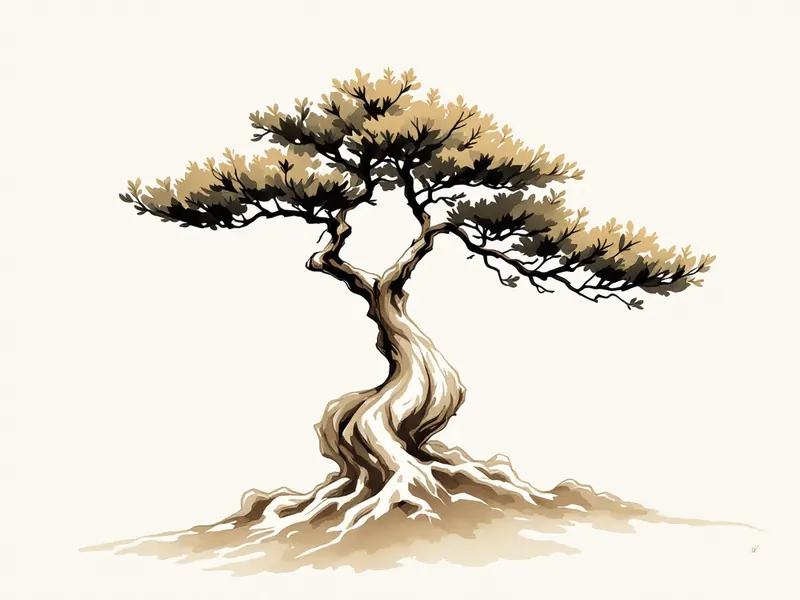
apex 樹芯
joo-SHEEN · the tree's top
The topmost point of the silhouette — where the eye finally lands, and where a plan usually starts.
Learn · Glossary
43 terms, with how to say them. Each one has a drawing.
joo-SHEEN · the tree's top
The topmost point of the silhouette — where the eye finally lands, and where a plan usually starts.
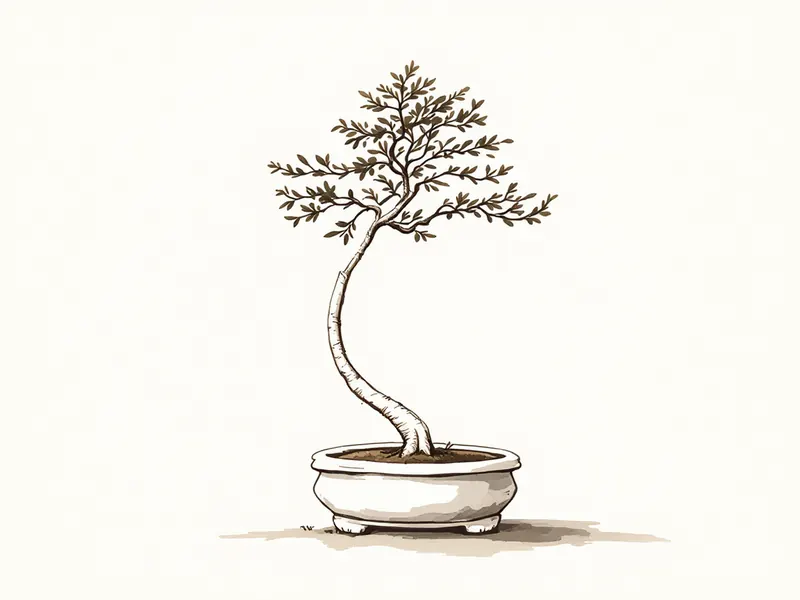
boon-JEEN · literati
A tall, sparse, almost bare trunk with foliage only near the top — the style painters and poets favoured.
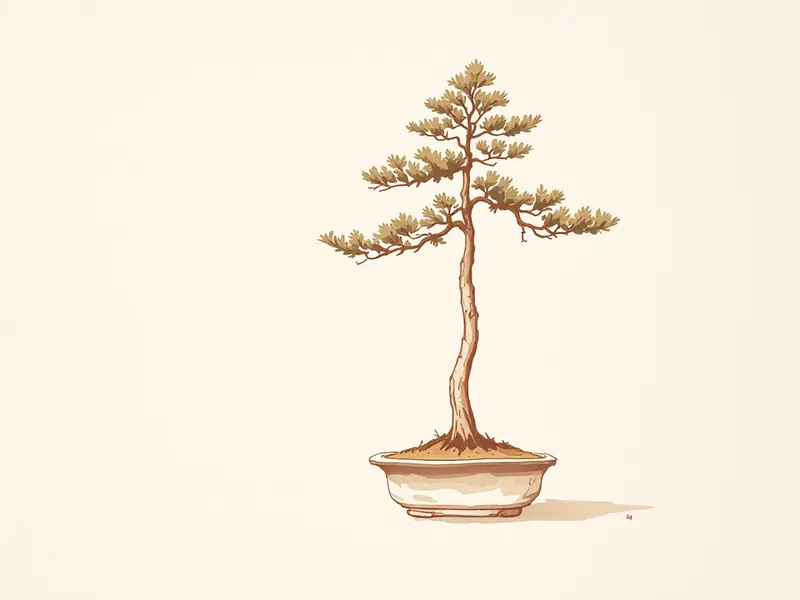
chok-KAHN · formal upright
A dead-straight trunk, tapering evenly from a wide base to a fine apex — the strictest style to pull off well.
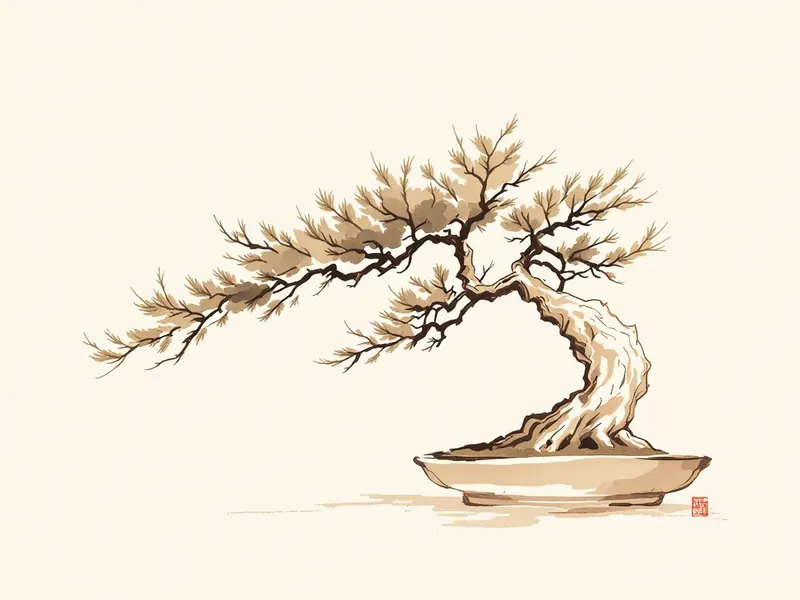
foo-kee-nah-GAH-shee · windswept
Every branch swept to one side, as if the tree has spent its life in one prevailing wind.
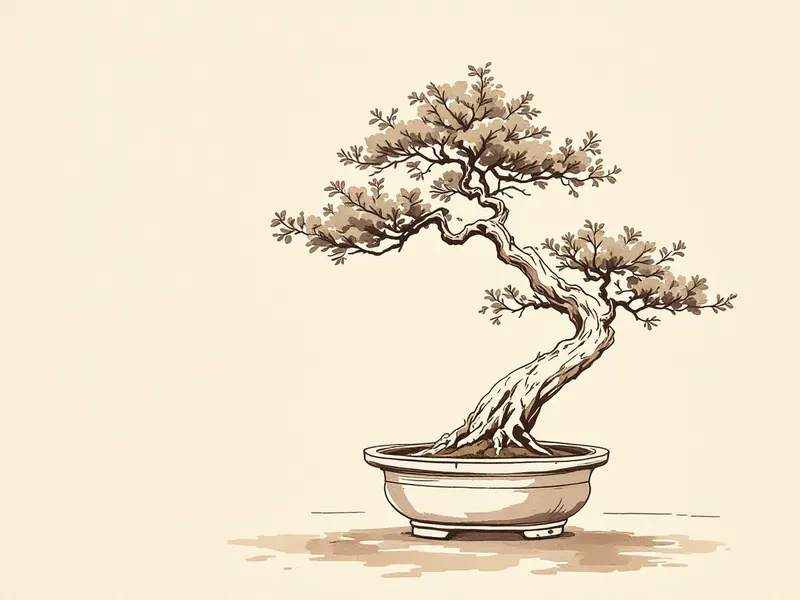
hahn ken-GUY · semi-cascade
Like kengai, but the trunk falls only to the rim of the pot, not below it.
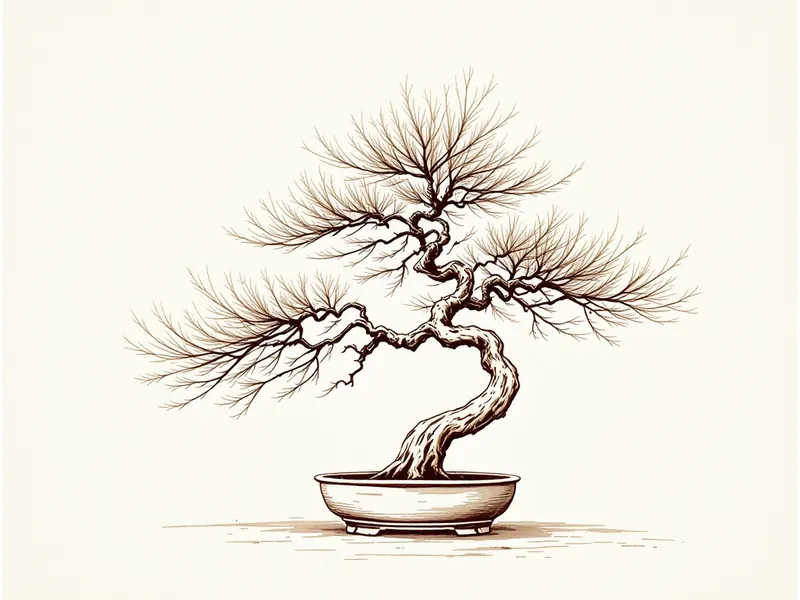
hoh-kee-DAH-chee · broom style
A straight trunk that fans out into a symmetrical, broom-shaped crown — the classic silhouette for elms.
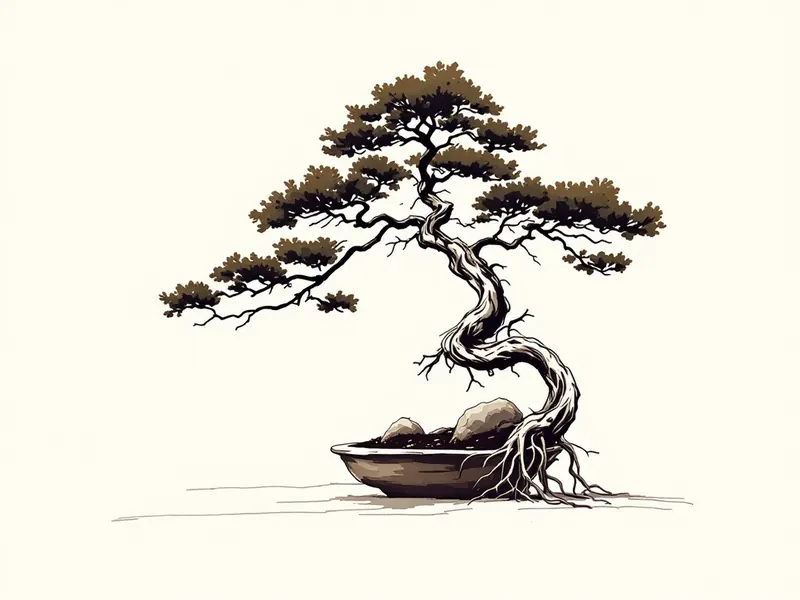
ee-shee-TSOO-kee · root-over-rock
Roots that grip and travel over a rock before reaching the soil.
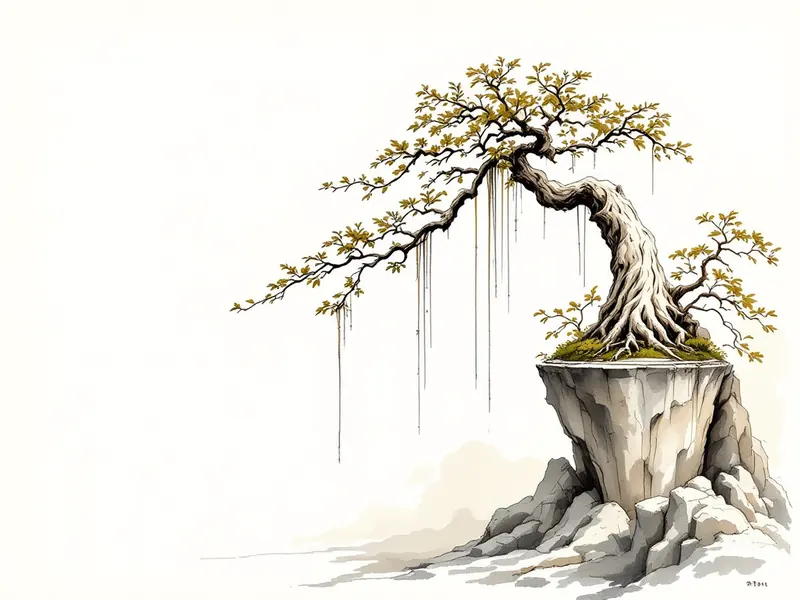
ken-GUY · cascade
The trunk drops below the rim of the pot, as if clinging to a cliff edge.
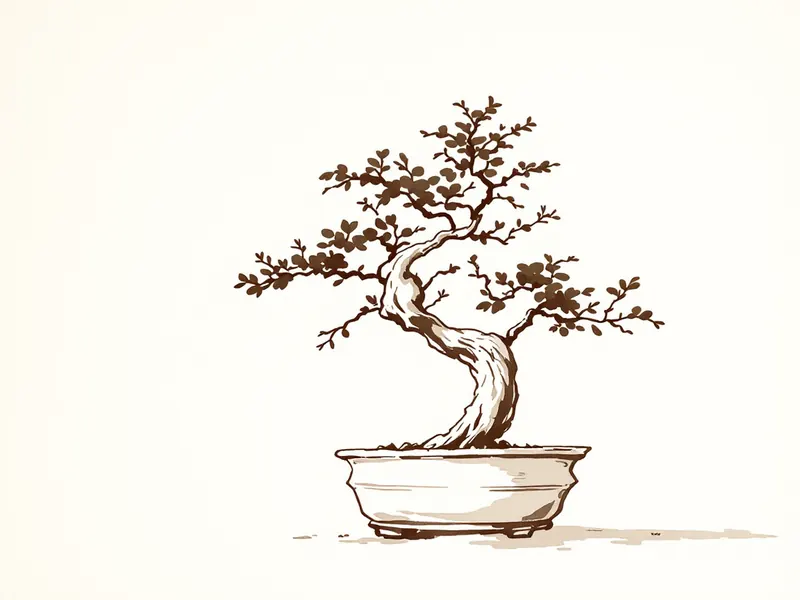
moh-YOH-ghee · informal upright
The most common style: a trunk that curves gently side to side as it rises, tapering the whole way.
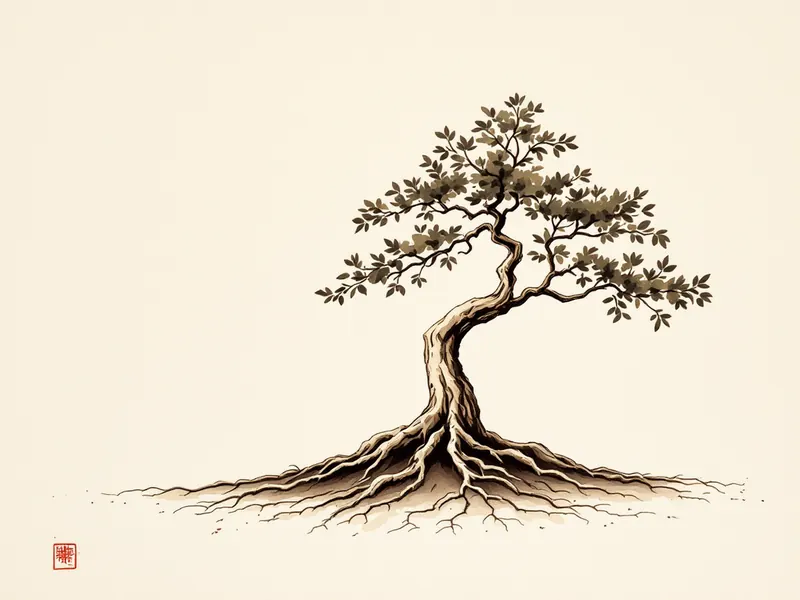
neh-BAH-ree · surface roots
The surface roots where the trunk meets the soil. Even, radial spread is the first thing a judge looks at, and the slowest thing to build.
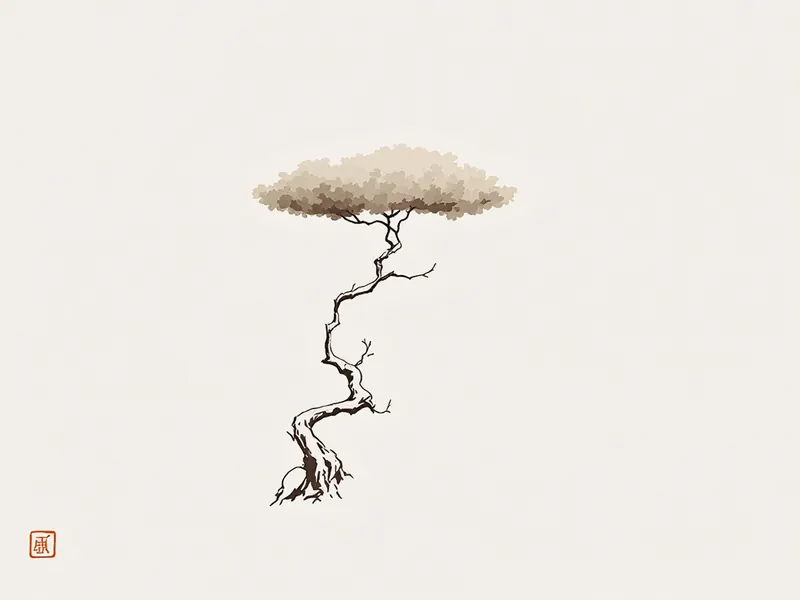
YOH-soh · a foliage cloud
One flattened cluster of foliage along a branch, built up over years of pinching and wiring.
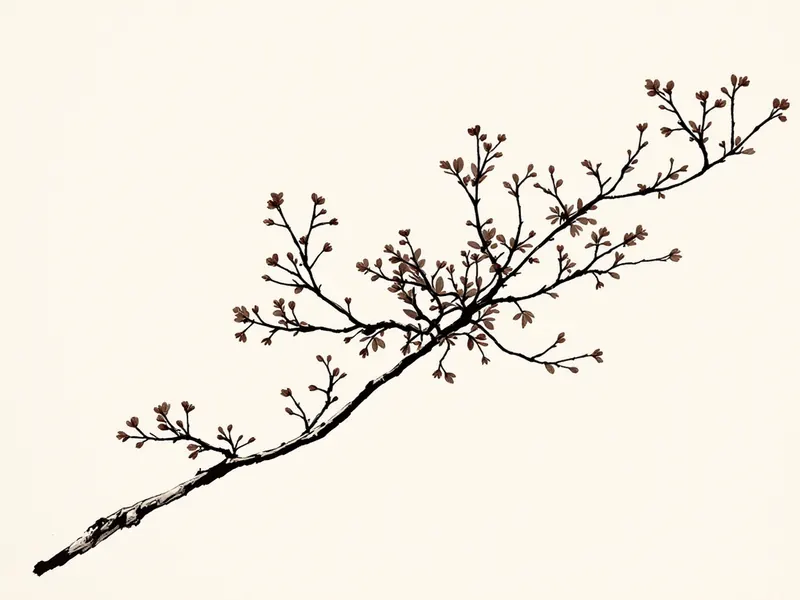
eh-dah wah-KAH-reh · fine branch splits
The fan of ever-finer twigs at the end of a branch — the sign of a tree that has been developed for years, not months.
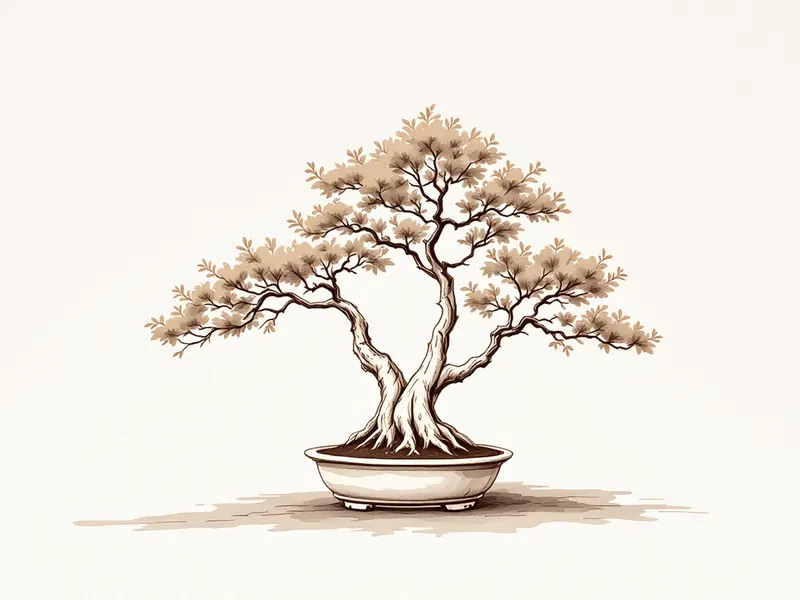
sahn-KAHN · triple trunk
Three trunks from one base, each a different height, read by the eye as one tree.
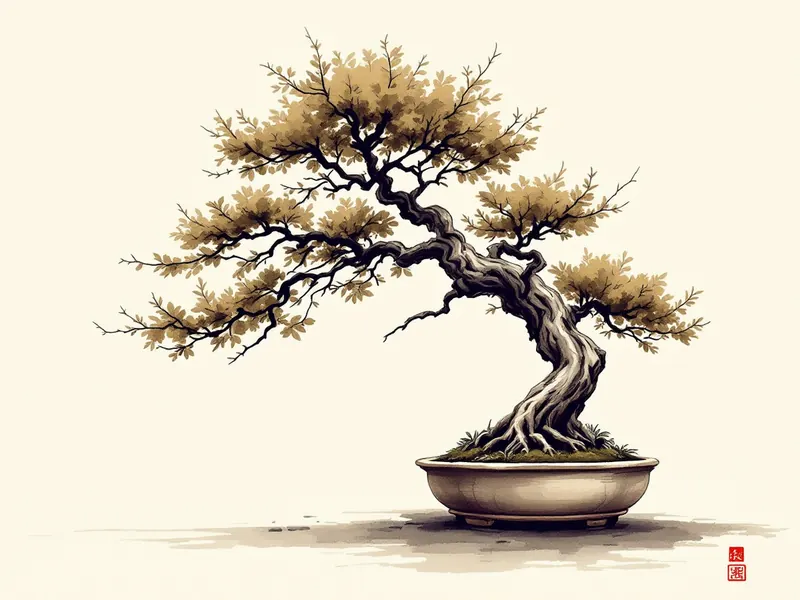
shah-KAHN · slanting style
The trunk leans from the soil at an angle, as if grown against a steady wind, with roots braced on the leaning side.
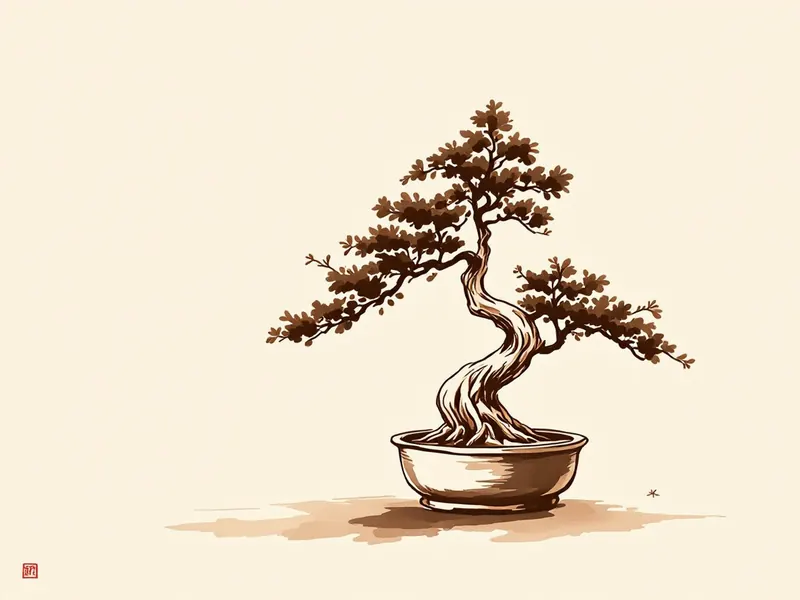
soh-KAHN · twin trunk
Two trunks from one root system, one taller and thicker, sharing a single canopy.
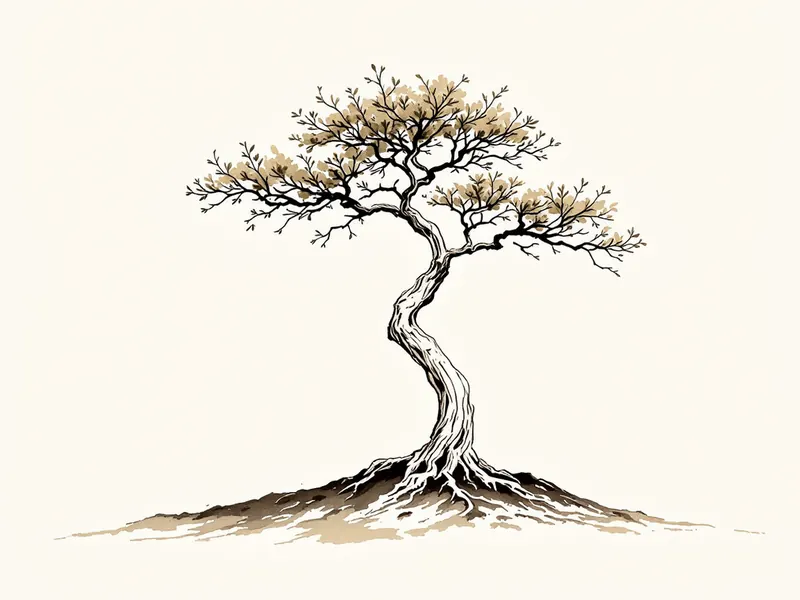
tah-chee-AH-gah-ree · trunk's first rise
The first stretch of trunk above the nebari, straight or curved, before the first branch. It sets the tree's whole direction.
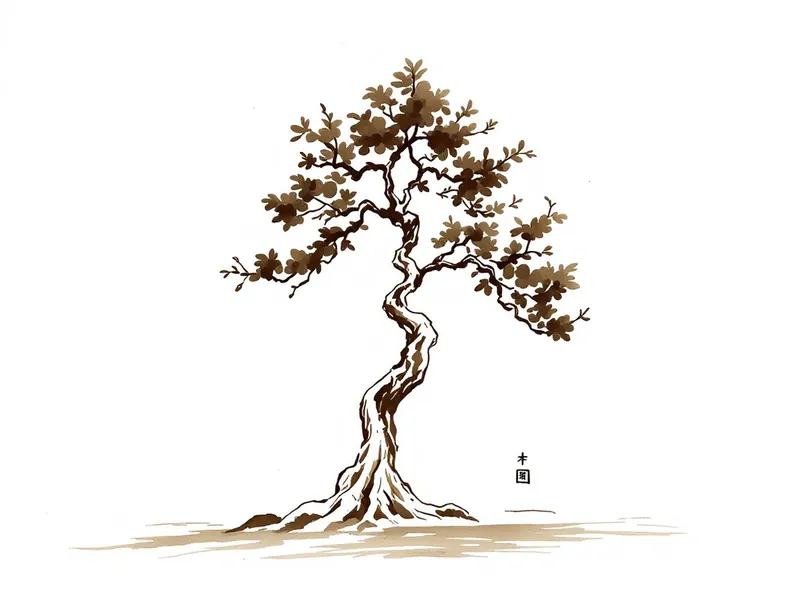
sah-kee-boh-SOH-ree · gradual trunk narrowing
How steadily a trunk narrows from base to apex — the single biggest giveaway of a tree's age and health.
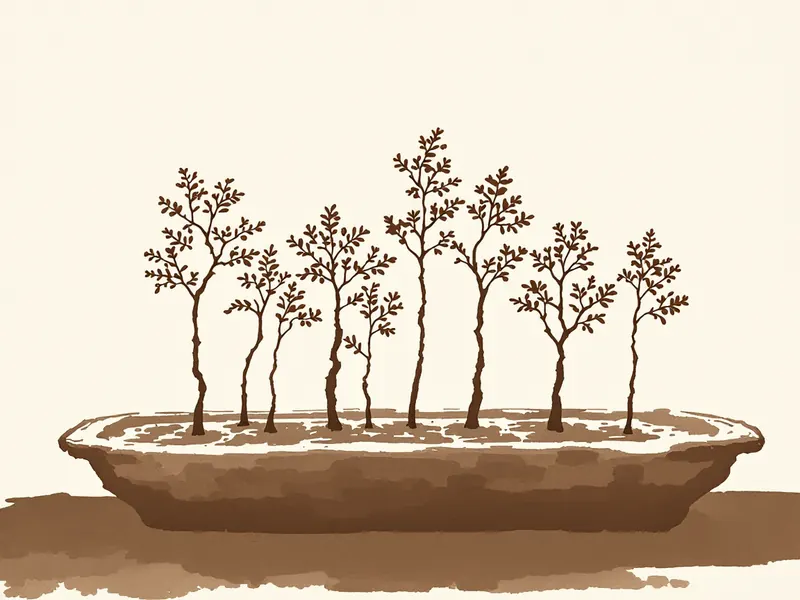
YOH-seh oo-eh · forest planting
Several trees, usually of the same species, planted together to read as a small forest.
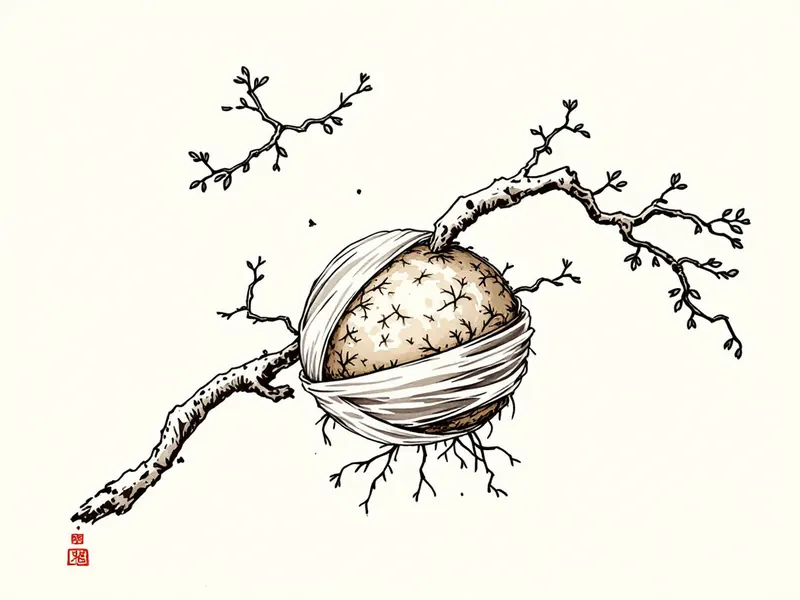
toh-REE-ghee · rooting in place
Wounding a branch and wrapping it in moist medium until it grows its own roots, then cutting it free as a new tree.
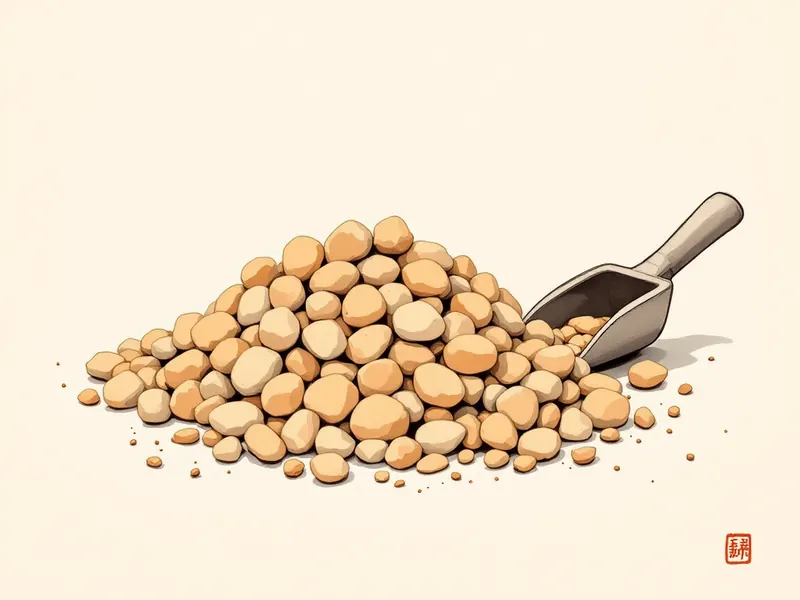
ah-kah-DAH-mah · fired clay soil
The reddish, fired clay that is the backbone of most bonsai soil mixes — it holds water but still breaks down over the years.
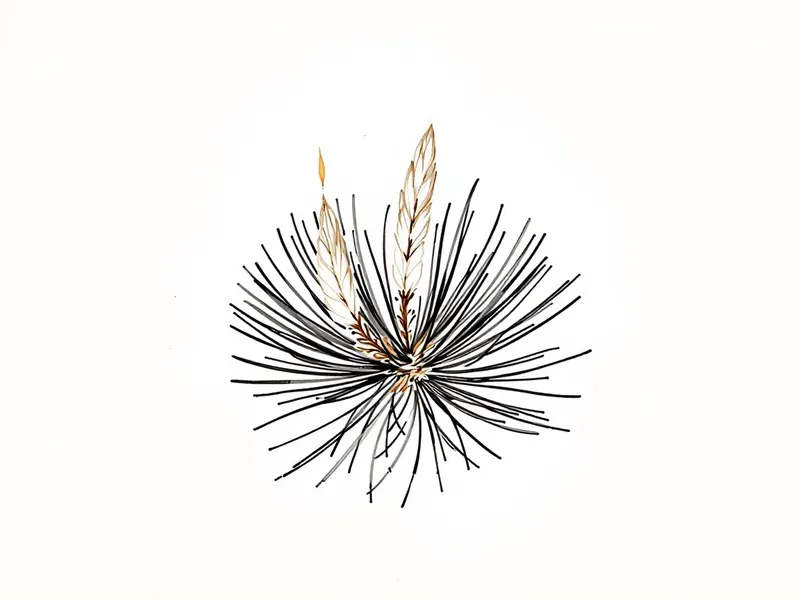
mee-doh-ree TSOO-mee · pine's spring shoot
The soft, upright new growth a pine pushes each spring, shortened or removed to balance vigour across the tree.
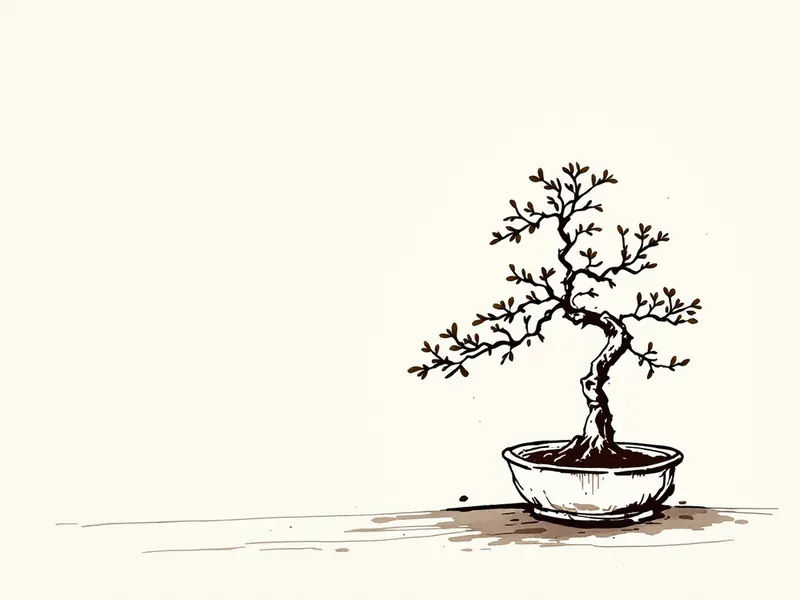
CHOO-heen · a medium-sized tree
The size between shohin and full-size — roughly 20 to 40 cm, still liftable with one arm.
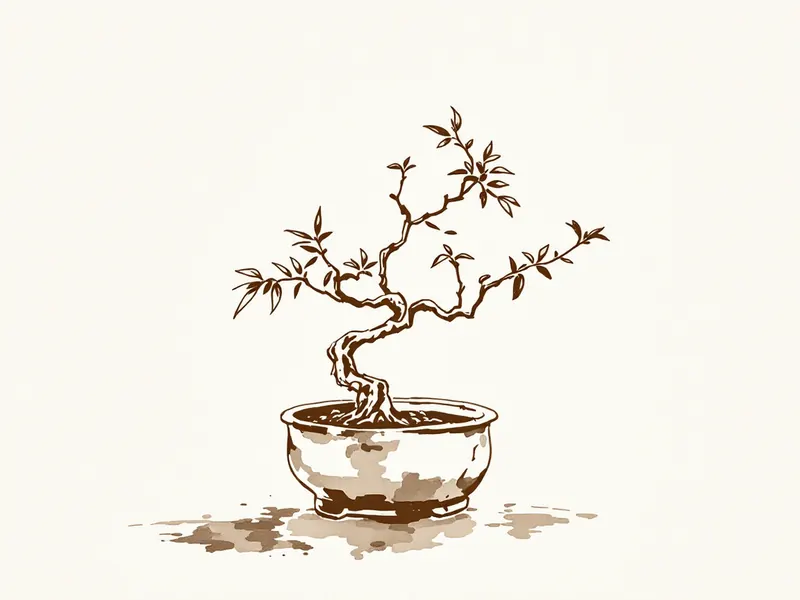
kee-ree-soo-KAH-shee · shaping by cutting
Building a branch's movement through repeated cutting back, without wire — slower than wiring, but needs no removal date.
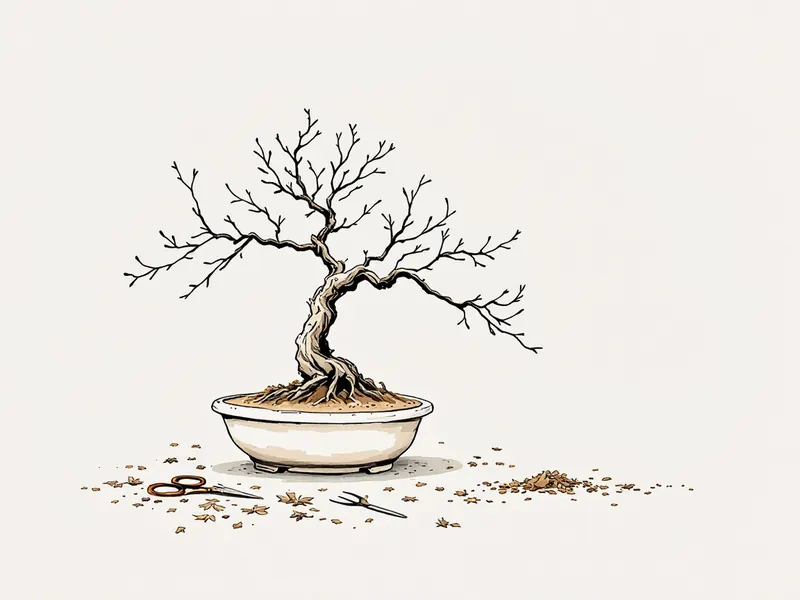
hah-GAH-ree · stripping all leaves
Stripping a healthy deciduous tree's leaves mid-season to force a smaller second set and tighter ramification.
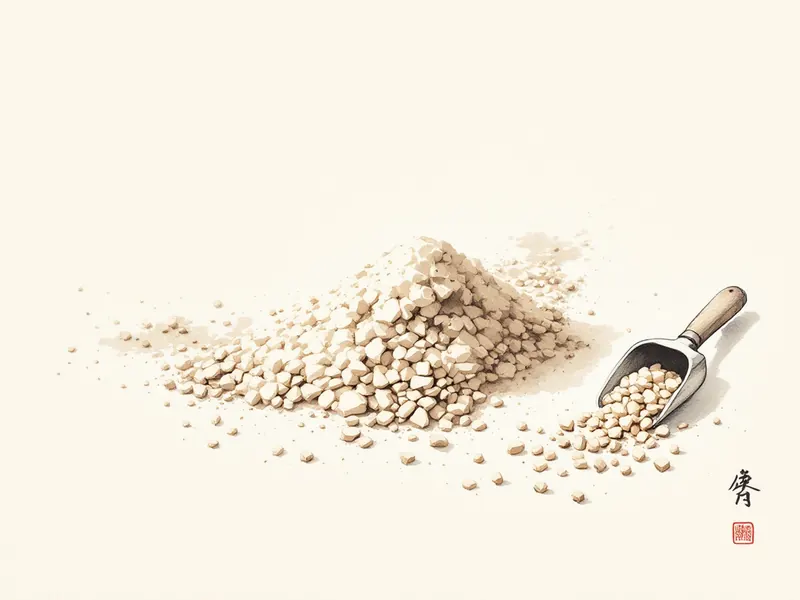
kah-NOO-mah · acidic pumice-like soil
A pale, acidic volcanic soil, mostly reserved for azaleas and other lime-hating species.
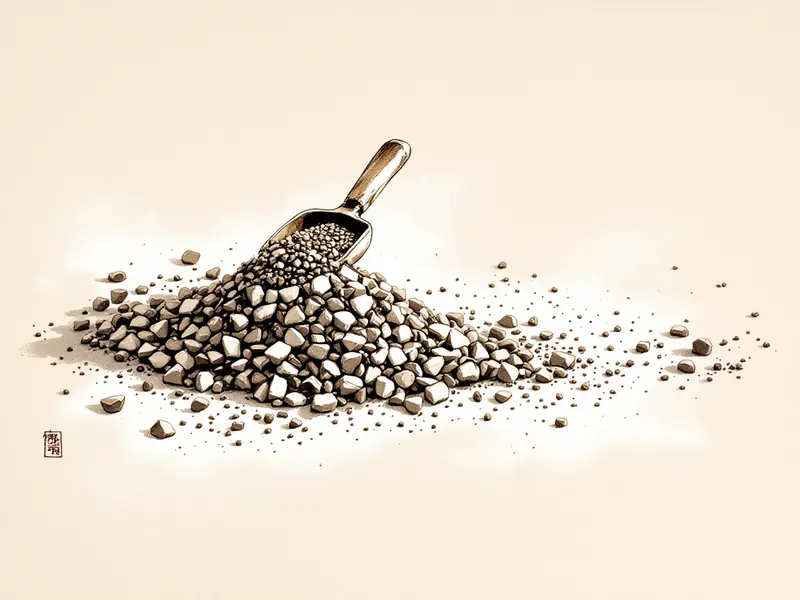
KEE-ryoo · hard sandy soil
A hard granitic river sand used for good drainage, especially under pines and junipers.
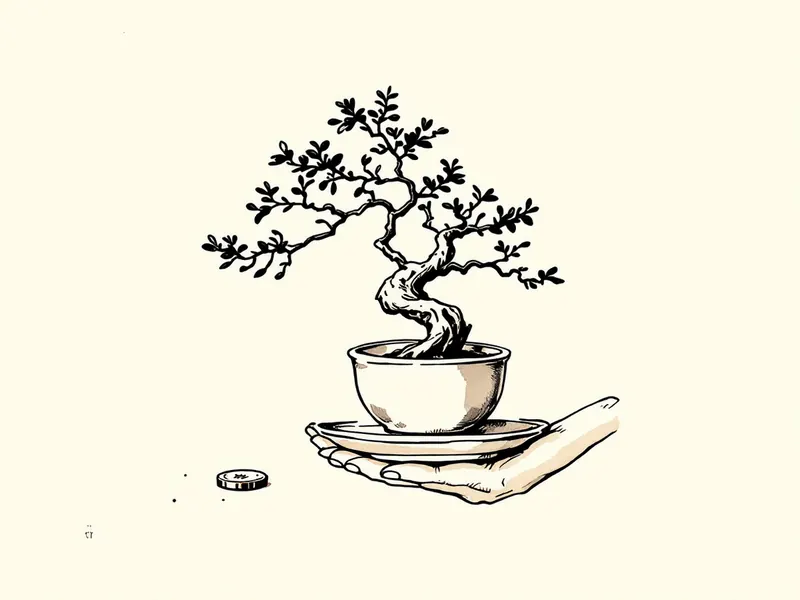
MAH-meh · a palm-sized tree
The smallest recognised size class — literally 'bean' — a tree you could close a fist around.
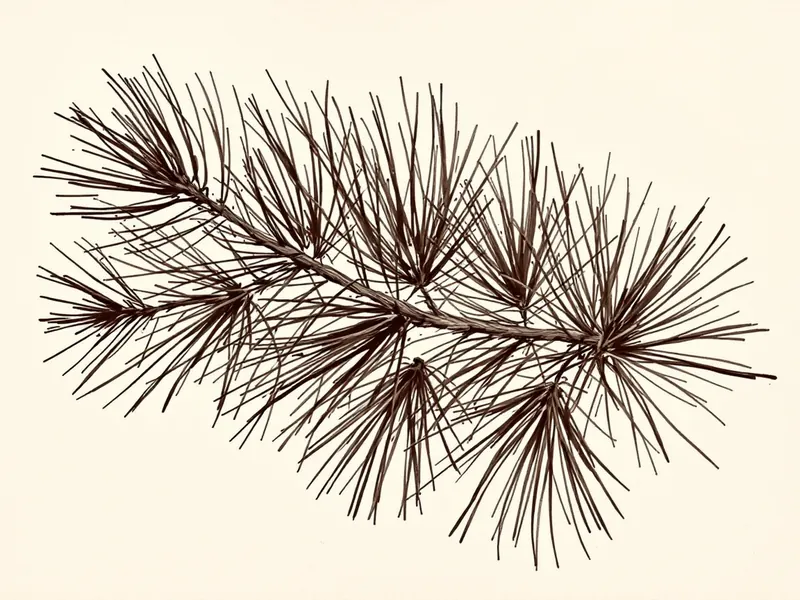
koh-YOH toh-ree · thinning old needles
Pulling a conifer's older needles by hand to let light reach the inner branches and even out density.
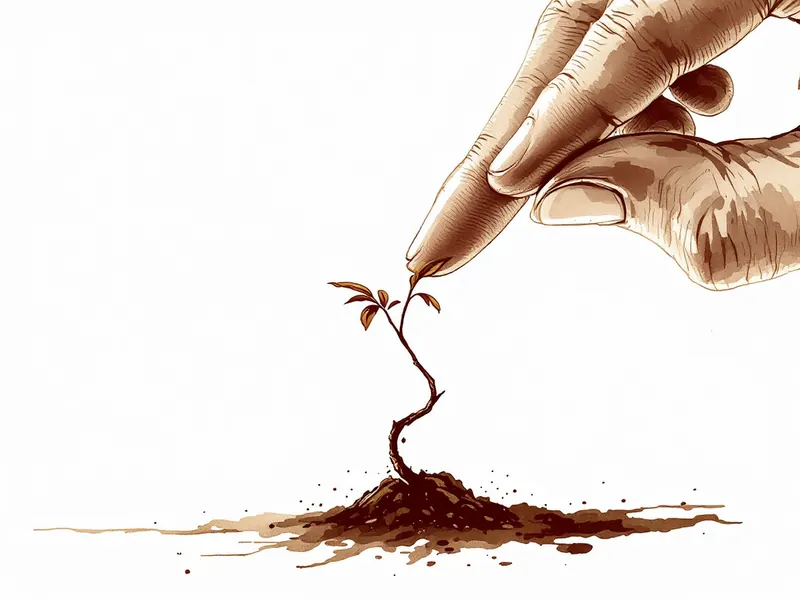
meh-TSOO-mee · nipping new shoots
Removing a new shoot's soft tip by hand to hold a pad's shape and push branching back toward the trunk.
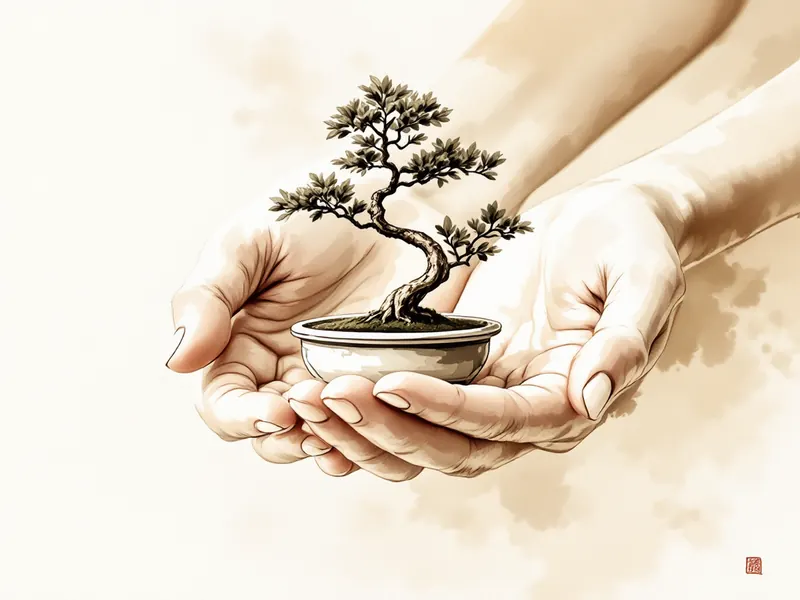
SHOH-heen · a two-hand tree
A small tree, taller than mame but still under about 20 cm — the size most beginners end up living with first.
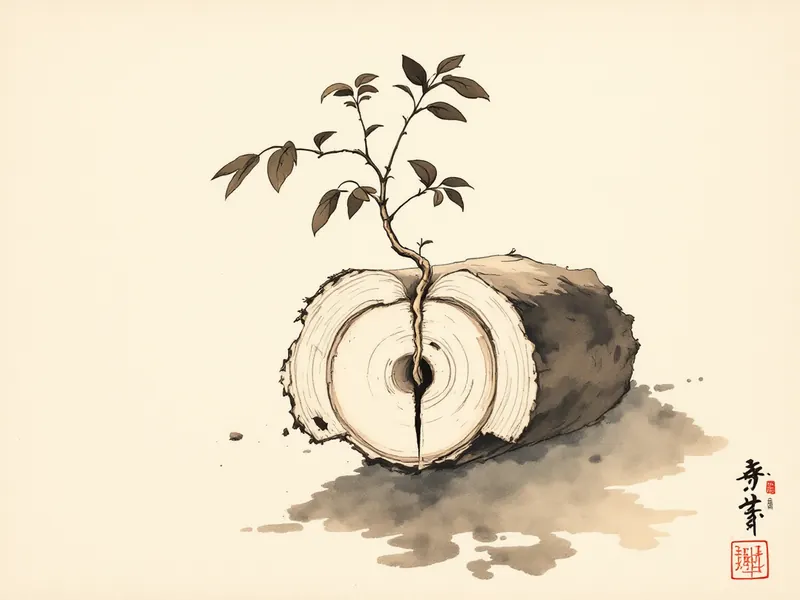
ee-toh kah-keh TSOO-ghee · threading through trunk
Passing a young, flexible shoot through a drilled hole in the trunk so it fuses in and becomes a branch exactly where one is missing.
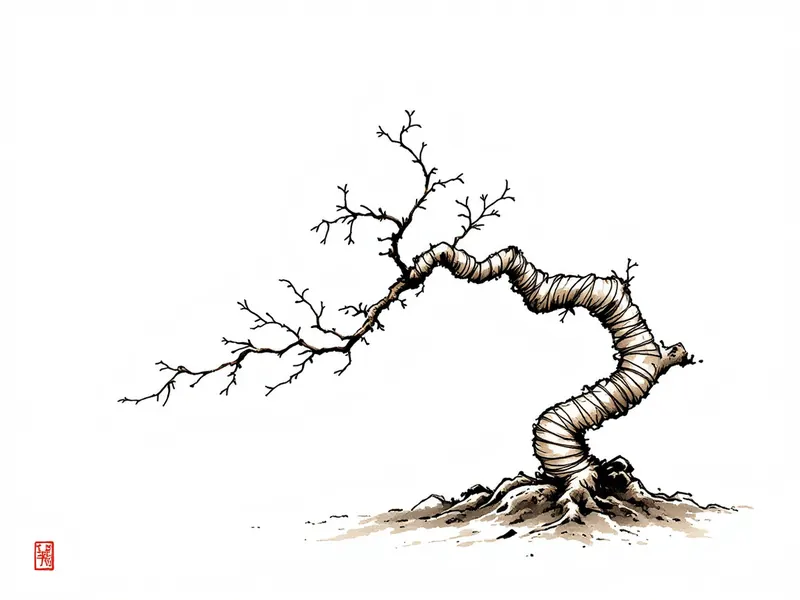
hah-ree-GAH-neh kah-keh · bending with wire
Wrapping copper or aluminium wire around a branch or trunk to bend it into the plan's target line.
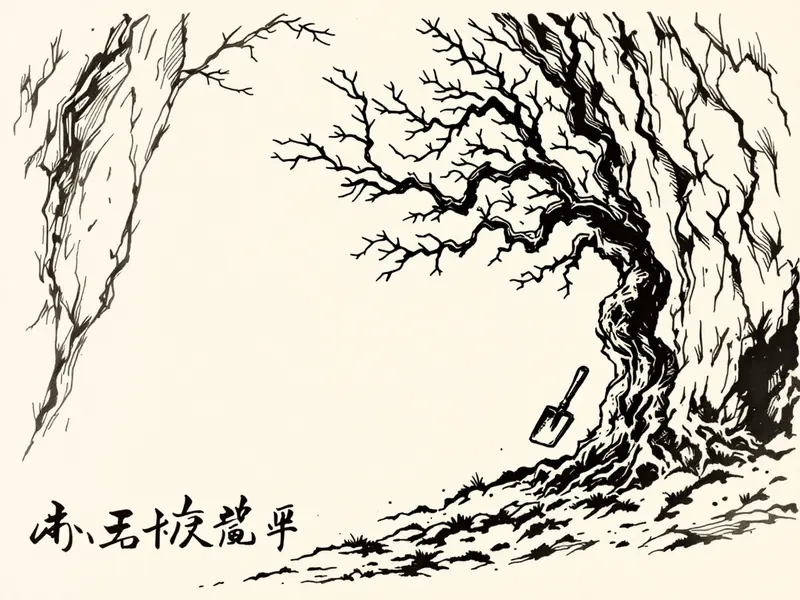
yah-mah-DOH-ree · dug from wild
A tree dug from a mountainside or roadside rather than grown from seed or cutting — often the oldest, most characterful material there is.
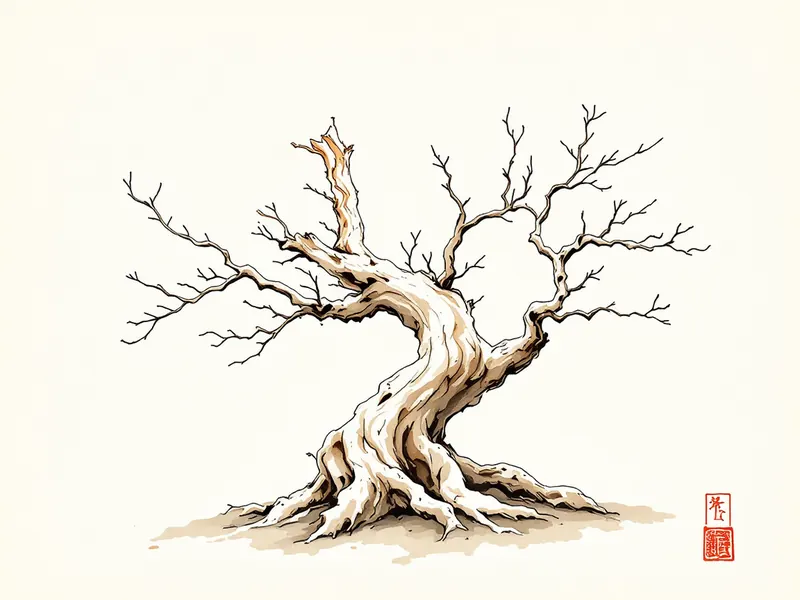
JEEN · dead branch
A branch stripped of bark and bleached, left as a bare, weathered spike — the sign of a limb the tree lost long ago.
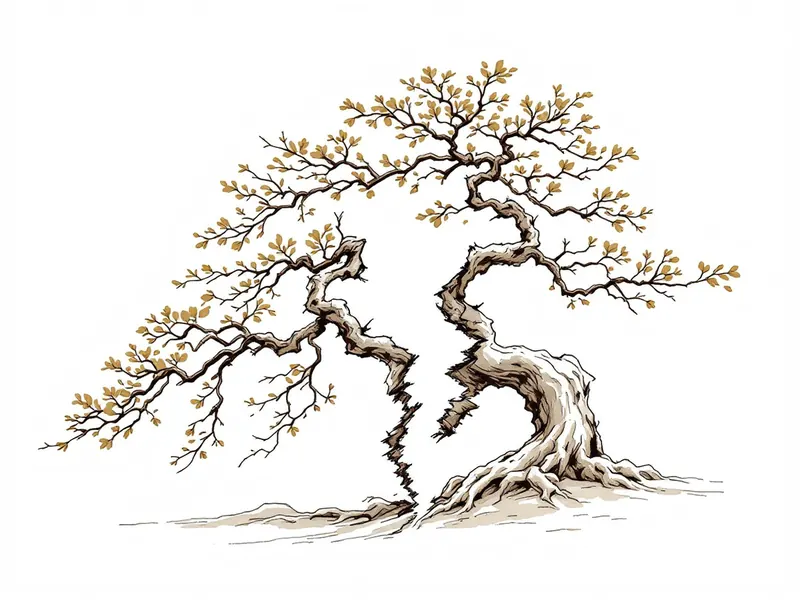
sah-bah-MEE-kee · a split trunk
A trunk deliberately split and hollowed along most of its length, as if lightning or age had opened it.
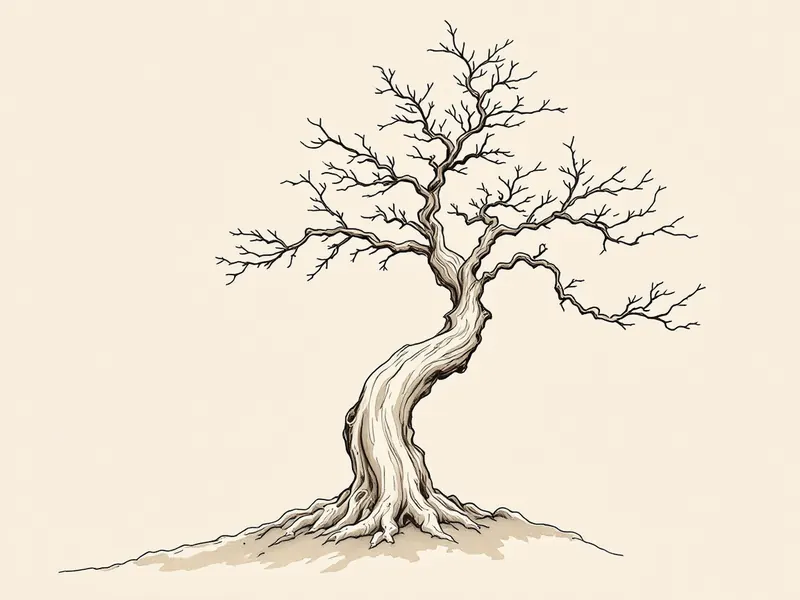
SHAH-ree · trunk deadwood
A stripped, bleached stripe of dead trunk wood, running with the grain — the story of the years the tree spent surviving, not growing.
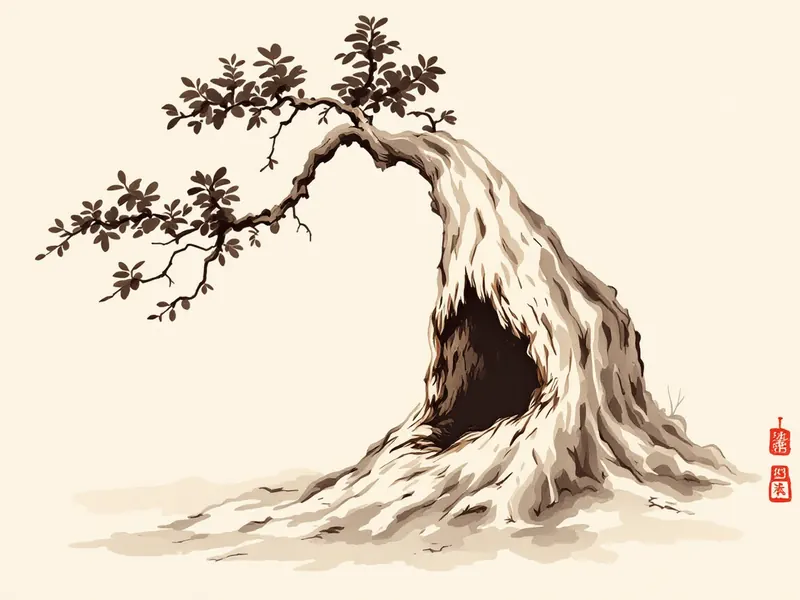
OO-roh · a trunk hollow
A hollow scar in the trunk, usually where a branch tore away years before — left bare, not healed over.
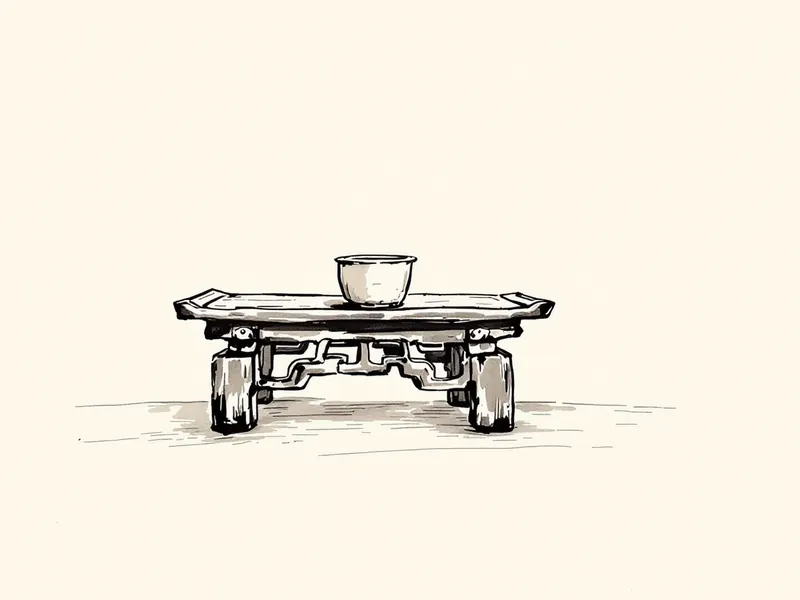
DYE · a display stand
The carved wooden stand a pot sits on for display, chosen to suit the tree's height and season.
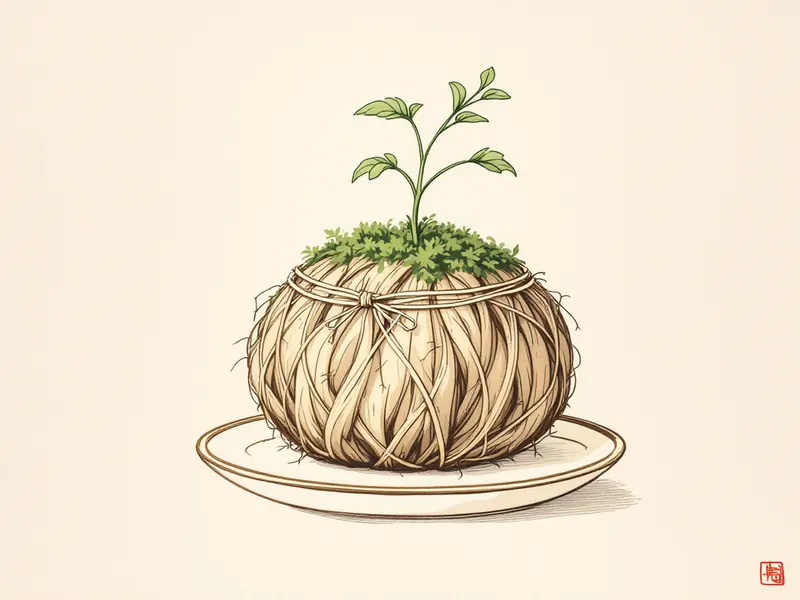
koh-keh-DAH-mah · moss-wrapped root ball
A plant's roots and soil shaped into a ball and wrapped in moss, grown and shown with no pot at all.
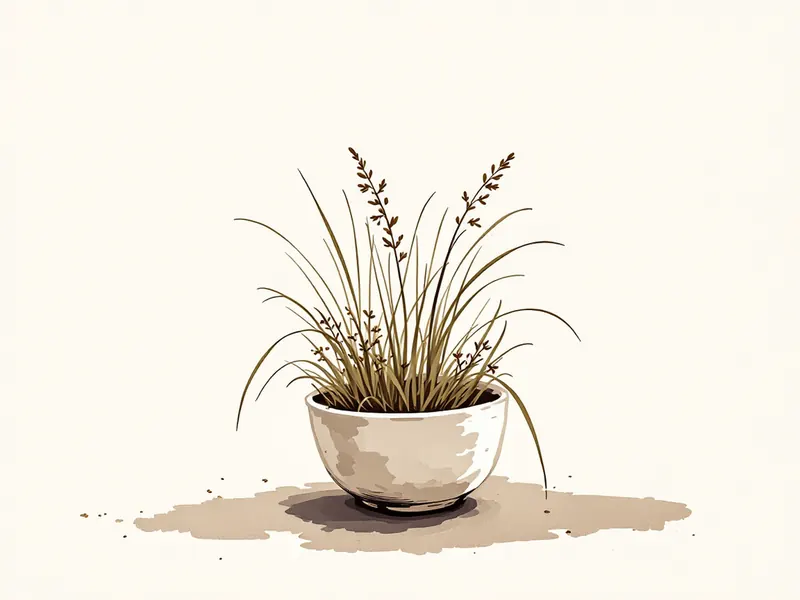
koo-sah-MOH-noh · grass accent planting
A small pot of grasses, ferns or flowering plants, shown beside a tree to suggest the season and the ground it grows from.
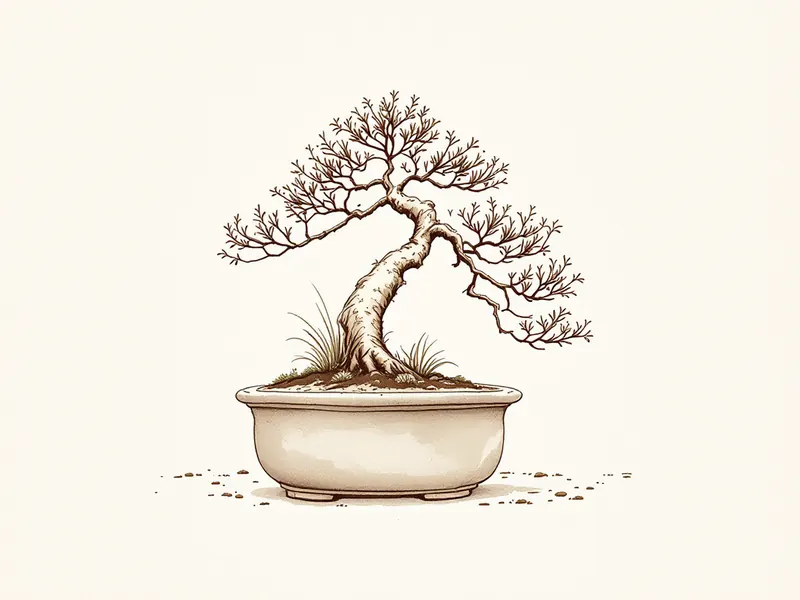
shee-tah-KOO-sah · an under-planting
A miniature companion planting placed in front of a tree on display, smaller and lower than kusamono.
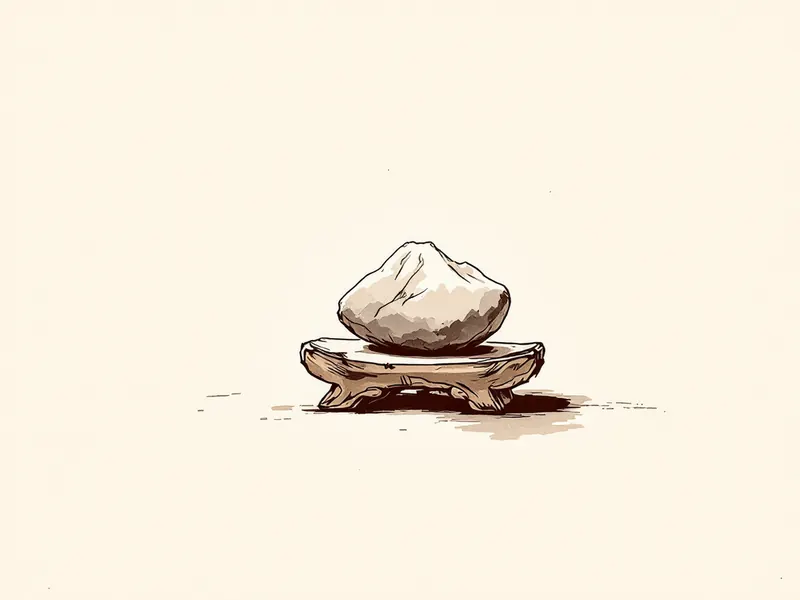
soo-ee-SEH-kee · a viewing stone
A naturally shaped stone, chosen and displayed for its resemblance to a mountain, an island, or a figure.
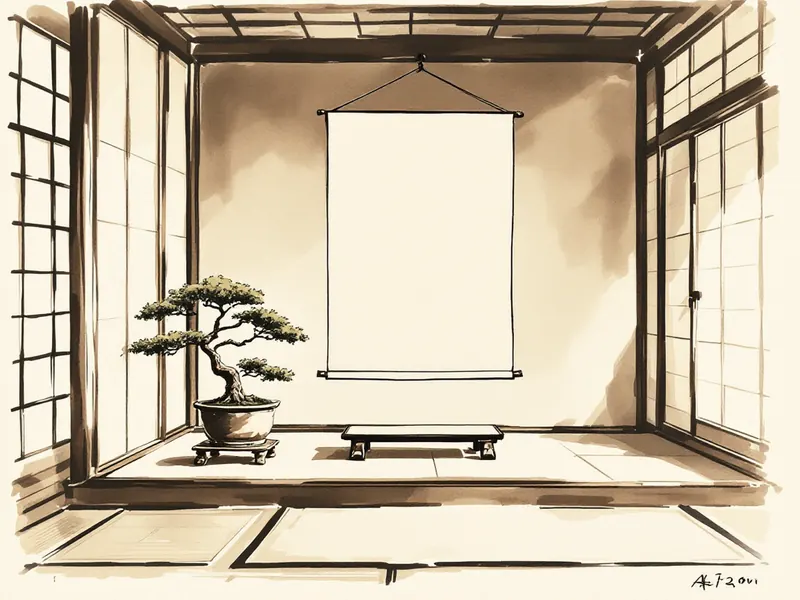
toh-koh-NOH-mah · the display alcove
The raised alcove in a traditional room where a tree is shown alone, with a scroll and one companion piece.