9 November 2026 · 4 min read
How Often Should You Water a Bonsai, and How Do You Check?
Learn to read your bonsai's soil, choose the right watering technique and spot the signs of too much or too little water before damage sets in.
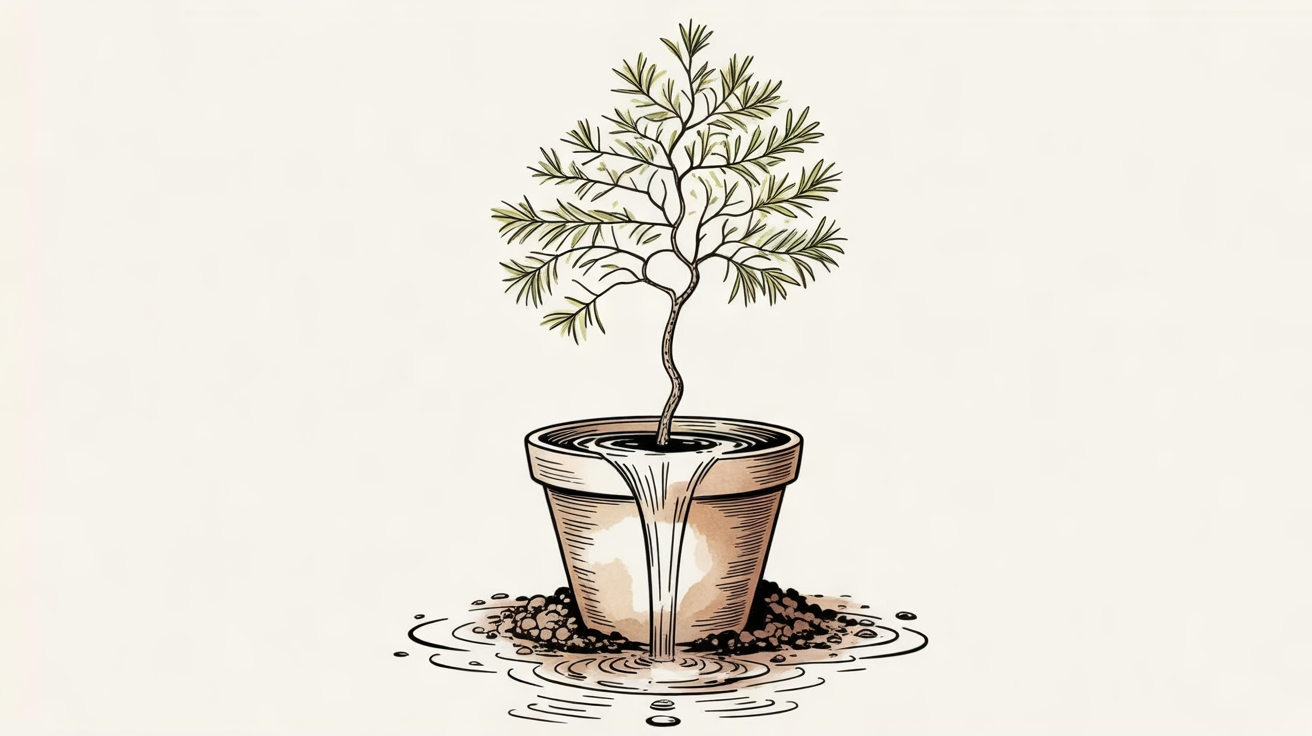
A bonsai needs water when its soil says so, not when a calendar does. Check the soil every day. When it is drying, water until water runs from the bottom of the pot. Small pots dry faster than larger ones, so the right interval shifts with the tree, the season and the weather.
- Check the soil daily and water by its condition, not a fixed schedule.
- Water thoroughly until it drains from the bottom of the pot.
- Use a fine rose for overhead watering, and save soaking for soil that has dried out completely.
- Never let the soil go bone dry or leave the pot standing in water.
How do you know when a bonsai needs water?
A daily look at the soil is the basis of any bonsai care plan. Water based on the actual condition of the soil rather than a fixed schedule, because the tree's needs change from day to day. The aim is soil that moves between saturated and slightly damp.
Watering is only recommended once the top layer of soil has dried. A useful signal is a surface that looks dry with a slight hint of moisture about a centimetre below. Four checks help you judge this:
- Finger test: push a finger into the soil and water if it feels dry or barely moist. Guides put the depth anywhere from just below the surface to about an inch (2–3 cm).
- Pot weight: a dry root ball feels noticeably lighter than a watered one.
- Chopstick: insert a chopstick or similar stick, and water if it comes out dry.
- Moisture meter: a meter takes the guesswork out of watering.
What changes how often a bonsai needs water?
Frequency depends on species, pot size, soil mix, temperature, humidity, season, wind and sun. Smaller pots dry faster than larger ones because they hold less soil. In summer, in heat or in small pots, a bonsai may need watering once or twice a day. Outdoor deciduous trees may need water daily or twice daily in heat waves.
Conifers such as junipers and pines like to dry out slightly more between waterings than deciduous trees, but they should not go bone dry. Published rules of thumb vary widely. One puts indoor bonsai at about every 2 to 3 days and outdoor bonsai at every 2 days or daily, while another suggests about once a week. That spread is why the daily soil check matters more than any single figure.
The soil and container shape all of this. Bonsai need free-draining soil, because standard potting compost holds too much water and suffocates the roots. Containers without drainage holes are not recommended, since they lead to root rot.
Water thoroughly and gently from above
When you water, water thoroughly until it drains from the bottom of the pot, so the whole root system is moistened. A little water or a light sprinkle is not enough.
Overhead watering is the standard technique. Use a watering can with a fine rose or a gentle spray, and water slowly and evenly over the whole soil surface, going over it more than once. Gentleness matters: a hard blast of water can wash soil off the surface and disturb roots.
When soaking is the better choice
Immersion means placing the pot in water until the bubbles stop. It saturates the root ball and is useful when the soil has dried out completely or repels water. It should not be your only or routine method. The top layer never gets flushed, so salts and minerals build up near the surface.
Misting the leaves does not replace watering the soil, as it only briefly raises humidity. Morning is the best time to water. A dry tree should still be watered in the afternoon rather than left waiting.
Which water is best for a bonsai?
Tap water is fine for most bonsai, though very hard water can leave white mineral deposits. Rainwater is ideal. Tap water also contains chlorine and other impurities, so letting it settle, or using filtered, rain or bottled water, is suggested.
Avoid water from a water softener, because it leaves sodium that harms roots. Avoid very cold water and water that has been sitting in a hot hose too, since temperature extremes stress roots. Watering with ice cubes is not recommended.
Too much or too little water shows in the leaves and soil
Both mistakes can kill a bonsai, and the symptoms point to the cause. If a tree wilts while its soil is wet, root rot is the usual reason.
| Problem | Signs | What happens to the tree |
|---|---|---|
| Overwatering | Yellowing leaves, soft stems, soil that stays wet for days | Roots rot |
| Underwatering | Dry, crispy leaf edges, sudden leaf drop, soil pulling away from the pot edges | Bone-dry soil can kill the tree and may make it impossible to revive |
Never leave a bonsai standing in water. The pot must drain freely, and a drip tray should be emptied after about an hour. Roots sitting in standing water lack oxygen and rot.
Plan ahead for repotting and time away
Watering a day or two before repotting makes the tree easier to remove and reduces root stress. Water it well immediately after repotting, then avoid overwatering for a few weeks.
Before you travel, a thorough watering may cover a short absence. Longer trips need a reliable person to check the soil, and any automatic system should be tested before you leave.
Sources
This article was written from the reporting below.
- bonsai.asn.au — Bonsai for Dummies | Bonsai Society of Australia Inc.
- bathgardencenter.com — Bonsai Tree Care: 10 Essential Tips for Healthy Bonsai
- bonsaibench.com — How to Water a Bonsai Tree the Right Way · The Bonsai Bench
- bonsai.laikastils.lv — First steps - BonsaiArt
- bonsaioutlet.com — How to Water a Bonsai Tree | Bonsai Watering Guide | Bonsai Outlet
- bonsaiboy.com — Bonsai FAQ
- staging.southernwv.edu — Caring for Bonsai • southernwv.edu
Generated with sources · reviewed by a human: yes · Approved by mariofilk, 27 Oct 2026 · Sourcing policy