2 November 2026 · 4 min read
Why Rainwater Beats Tap Water for Bonsai: Hardness, pH and Chlorine Explained
Learn how hardness, pH and disinfectants in your water affect bonsai soil, which species need rainwater, and how to treat or store water.
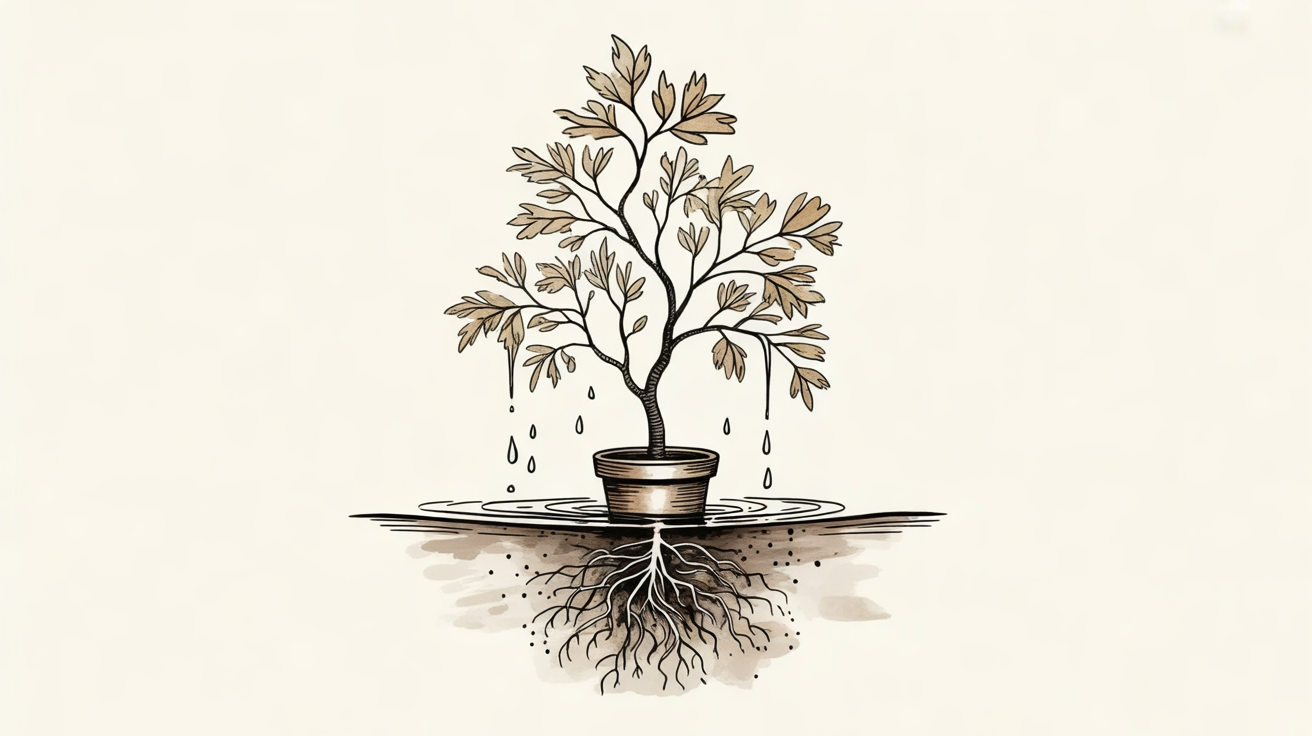
Rainwater suits bonsai better than tap water mainly because it is soft, mildly acidic and free of added chlorine. The difference matters most for acid-loving species such as azalea and camellia. For most other trees in most places, tap water is generally fine, and rainwater is a convenience rather than a necessity.
Understanding why helps you decide what belongs in your own care plan. The reasoning rests on two things: the minerals dissolved in the water, and the disinfectants water companies add to it.
What makes rainwater different
Rainwater is naturally soft and low in minerals. It is typically mildly acidic, with a pH of roughly 5.5 to 6.5. The acidity comes from the atmosphere: as rain falls it absorbs carbon dioxide, which forms weak carbonic acid.
Rainwater is never treated. As a result it contains no added chlorine.
Hardness and pH
Hard water carries dissolved calcium and magnesium, in the form of carbonates and bicarbonates, picked up as it passes through rock such as chalk and limestone. Higher calcium carbonate raises pH, so harder water is more alkaline. The gap can be wide. A London rainwater sample measured pH 5.89, while the local hard tap water was about pH 7.75.
| Property | Rainwater | Hard tap water |
|---|---|---|
| Typical pH | Mildly acidic, roughly 5.5 to 6.5 | Alkaline, about 7.75 in one London sample |
| Dissolved minerals | Soft and low in minerals | Calcium and magnesium from chalk and limestone |
| Disinfectant | None added | Chlorine or chloramine |
| Main caution | Pollution and debris during collection | Rising soil pH in acid-loving species |
Why soil pH matters to the tree
In a pot, each watering adds a little more of whatever the water carries. Repeated watering with hard, alkaline water gradually raises the pH of container soil or compost. In acid-loving plants this impairs the uptake of iron and manganese and causes chlorosis, a yellowing of the leaf between green veins.
Slightly acidic conditions, at about pH 6 to 7, appear best for nutrient availability and uptake. The picture is complex, though, because soil availability and plant uptake respond to pH in opposite directions.
Which species are affected
Hard tap water is a real problem mainly for acid-loving species such as azalea and camellia, and for these rainwater is the safest choice. Most other bonsai tolerate tap water.
Hard water can also leave a white mineral crust on the soil surface and the rim of the pot. Flushing the soil or mixing in rainwater helps.
Chlorine and chloramine
Water utilities add chlorine or chloramine to tap water as a disinfectant, at levels up to 4 mg/L (4 ppm) considered safe in drinking water. Whether this matters to bonsai is less clear-cut than the hardness question.
One view holds that chlorine harms bonsai by disrupting the soil ecosystem and stripping or sterilising beneficial soil microorganisms. On this account the damage shows as stunted growth, yellowing leaves and browning at the leaf tips.
Other evidence points the other way. Chlorinated water at 5 ppm affected soil organisms only in the top half inch, and populations recovered within days of stopping. On this reading, chlorine at drinking-water levels is not a significant problem for plants or soil life, and the small volumes used on bonsai make no practical difference to roots.
If you prefer to reduce chlorine anyway, leaving water to stand lets it dissipate. Chloramine does not dissipate this way, so letting water sit will not remove it.
Other considerations with tap water
Tap water contains trace heavy metals such as lead, copper and zinc. These can accumulate in bonsai soil and harm trees.
Domestic water softeners are not a fix for hard water. They swap calcium and magnesium for sodium, which does not lower pH. Sodium then builds up in the soil and harms plants, so sodium-softened water should not be used long term on bonsai or on acid-loving species.
Filters vary in what they remove. A basic carbon filter removes chlorine but does not significantly reduce hardness, while reverse osmosis removes nearly all dissolved minerals.
Collecting and storing rainwater
Rainwater has its own risks. Collected rainwater can be contaminated by urban air pollution, roof debris and other pollutants. Store it covered to keep out algae and debris.
- Keep collection butts or containers covered between showers.
- Reserve rainwater first for azaleas, camellias and other acid-loving species.
- Mix rainwater with tap water, or flush the soil, if a white crust appears on the soil or pot rim.
- Avoid sodium-softened water as a long-term source.
- Use a carbon filter if chlorine is your concern, or reverse osmosis if hardness is.
Choosing water for your collection
The case for rainwater rests mostly on hardness and pH. Soft, mildly acidic water keeps container soil from drifting towards alkalinity, which protects iron and manganese uptake in acid-loving species. Chlorine is a weaker argument, since the evidence on its effect at drinking-water levels points in both directions.
For most trees, tap water is adequate, and rainwater is a useful extra rather than a requirement. If you grow azaleas or camellias, or live in a hard-water area, collecting rainwater is worth building into your seasonal routine. Note any yellowing between the veins in your journal, because it is the earliest sign that soil pH is climbing.
Sources
This article was written from the reporting below.
- bonsaitreegardener.net — Bonsai Watering: Rainwater Vs. Tap Water - Bonsai Tree Gardener
- growscotland.co.uk — Tap Water vs Rainwater: Does It Matter for Your Plants?
- webonsai.com — Best Water for Bonsai: Tap, Rain, or Filtered — WeBonsai
- bonsai-science.com — Water hardness, pH and bonsai | Bonsai Science
- bonsaibench.com — Best Water for Bonsai: Tap, Rain, or Filtered? · The Bonsai Bench
- aquapure-fl.com — Southwest Florida & Bonsai Cultivation - One More Thing Ruined - Aqua Pure Solutions Online
- cdc.gov — About Water Disinfection with Chlorine and Chloramine | Drinking Water | CDC (official)
Generated with sources · reviewed by a human: yes · Approved by mariofilk, 23 Oct 2026 · Sourcing policy