12 October 2026 · 4 min read
Akadama, Pumice and Lava Rock: Which Bonsai Soil Component Holds What
Learn what each of the three main bonsai soil components contributes, and how to adjust the ratio for your species and climate.
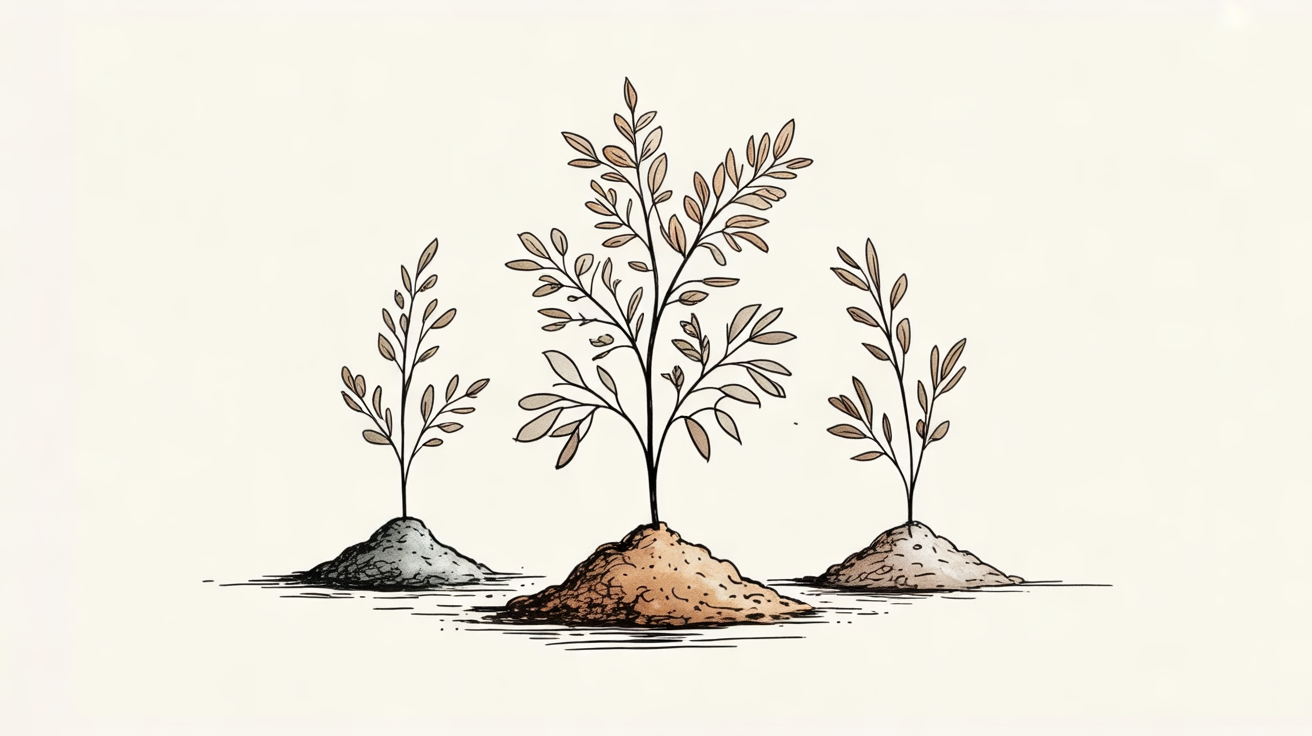
In a standard bonsai mix, akadama holds water and nutrients, pumice adds drainage and aeration while keeping some moisture, and lava rock adds drainage, weight and permanent structure. The baseline recipe uses equal parts of all three. Changing that ratio is the main way to suit the mix to a species and a climate.
Akadama: the water and nutrient store
Akadama is a fired clay granule from Japan. In the mix it is the component that holds water and nutrients. It has high water retention and a high cation exchange capacity, which is the soil's ability to hold nutrient ions where roots can take them up.
Measured figures put akadama's cation exchange capacity at about 21 per 100g, and one other measurement gives about 31.4. Pumice comes in at about 15 and lava rock at about 10. In water-retention tests on ten substrates, akadama ranked second, pumice third and lava eighth.
Akadama also behaves differently from the other two at the root. Roots can grow into individual akadama grains. In pumice and lava rock they grow only in the spaces between particles.
Why akadama works as a repotting timer
Akadama is not permanent. Over time it breaks down into fine particles or mud, and that slow decline is why it works as a built-in repotting timer. It usually lasts roughly 2 to 4 years before it degrades.
Frost shortens that span. Akadama breaks down faster in freeze-thaw conditions, and in hard-freeze climates soft-grade akadama can degrade within one or two seasons. Hard-grade akadama holds its structure for five years or more, so in cold regions the grade belongs in your care plan.
Akadama also changes colour as it dries. That gives a visual cue for watering, and you can note it in a journal alongside your routine.
Pumice: drainage with some moisture
Pumice is a light, porous volcanic rock. It provides drainage and aeration and still holds some moisture. Its water retention is low to moderate, which is less than akadama.
Unlike akadama, pumice does not break down. It stays structurally stable over the long term, so it keeps the mix open after the akadama has started to collapse.
Lava rock: weight, drainage and permanent structure
Lava rock is denser, heavier and harder than pumice, and it holds little water. Its contribution is drainage, weight and permanent structure. It does not break down, so it can be reused.
Lava rock has two further qualities. It holds some heat, which conifers appreciate. Its rough, porous surface also hosts beneficial microorganisms such as mycorrhizal fungi.
A caution on sourcing lava rock
Not all lava rock is equal. Lava rock and scoria from North American sources in Texas, Washington and Oregon may contain elevated or toxic levels of boron, and this correlates with poor root development. Hawaiian and Japanese lava appear unaffected, so the origin of a bag is worth recording.
The three components side by side
| Component | Water retention | Breaks down? | Main contribution |
|---|---|---|---|
| Akadama | High | Yes, roughly 2 to 4 years | Holds water and nutrients |
| Pumice | Low to moderate | No | Drainage and aeration, some moisture |
| Lava rock | Little | No, reusable | Drainage, weight, permanent structure |
Adjusting the ratio for species and climate
The classic baseline mix is equal parts akadama, pumice and lava rock (1:1:1). From there, the akadama share goes up where a tree needs more water and down where it needs faster drainage. The usual adjustments are these:
- Deciduous trees: a more water-retentive mix of about 50% akadama, 25% pumice and 25% lava (2:1:1).
- Pines and junipers: faster-draining mixes with less akadama and more pumice, lava or both than a deciduous mix.
- Conifers in general: the equal 1:1:1 mix of akadama, pumice and lava.
- Hot, dry climates: more akadama, at about 50 to 60% of the mix.
- Humid or rainy climates: less akadama and more pumice or lava.
Pumice levels are a separate consideration. Experienced growers typically keep pumice at 40 to 50% of the total mix across nearly all species. That is a higher share than the deciduous recipe above, so the two approaches are worth comparing against your own trees and conditions.
The reasoning comes back to what each grain does. Akadama-heavy mixes stay moist longer, which suits deciduous species and dry heat. Mixes with more pumice and lava drain faster, which suits pines and junipers and wet climates where roots risk sitting in water.
Conclusion
Each component does a different job. Akadama holds water and nutrients and slowly breaks down. Pumice and lava rock keep the mix open and do not break down, and lava adds weight and holds some heat.
Start from the 1:1:1 baseline, then shift the akadama share to suit the species and the local climate. Keep a record of the akadama grade, where your lava rock came from and when each tree was repotted. That way your seasonal calendar reflects how the soil is actually ageing.
Sources
This article was written from the reporting below.
- webonsai.com — Bonsai Soil Mix: Akadama, Pumice, and Lava Rock Explained — WeBonsai
- bonsaiwonderland.com — Bonsai Soil and Repotting: The Complete Guide
- bonsaibench.com — Bonsai Soil Mix Calculator — The Bonsai Bench · The Bonsai Bench
- wabibonsai.com — Bonsai Soil: Akadama vs Pumice vs Lava Rock – Wabi Bonsai
- bloomingexpert.com — Bonsai Soil Ratios: Akadama, Pumice, and Lava Rock
- natesnursery.com — Bonsai Soil Information | Nate's Nursery
- en.jardineriaon.com — The ultimate guide to choosing the best bonsai substrate: types, mixes, and expert advice
Generated with sources · reviewed by a human: yes · Approved by mariofilk, 12 Oct 2026 · Sourcing policy