7 October 2026 · 4 min read
Akadama, Pumice and Lava Rock: Choosing a Bonsai Soil Mix by Climate
Learn how to shift akadama, pumice and lava rock ratios for wet, dry, hot or freezing weather, and see which advice rests on more than one source.
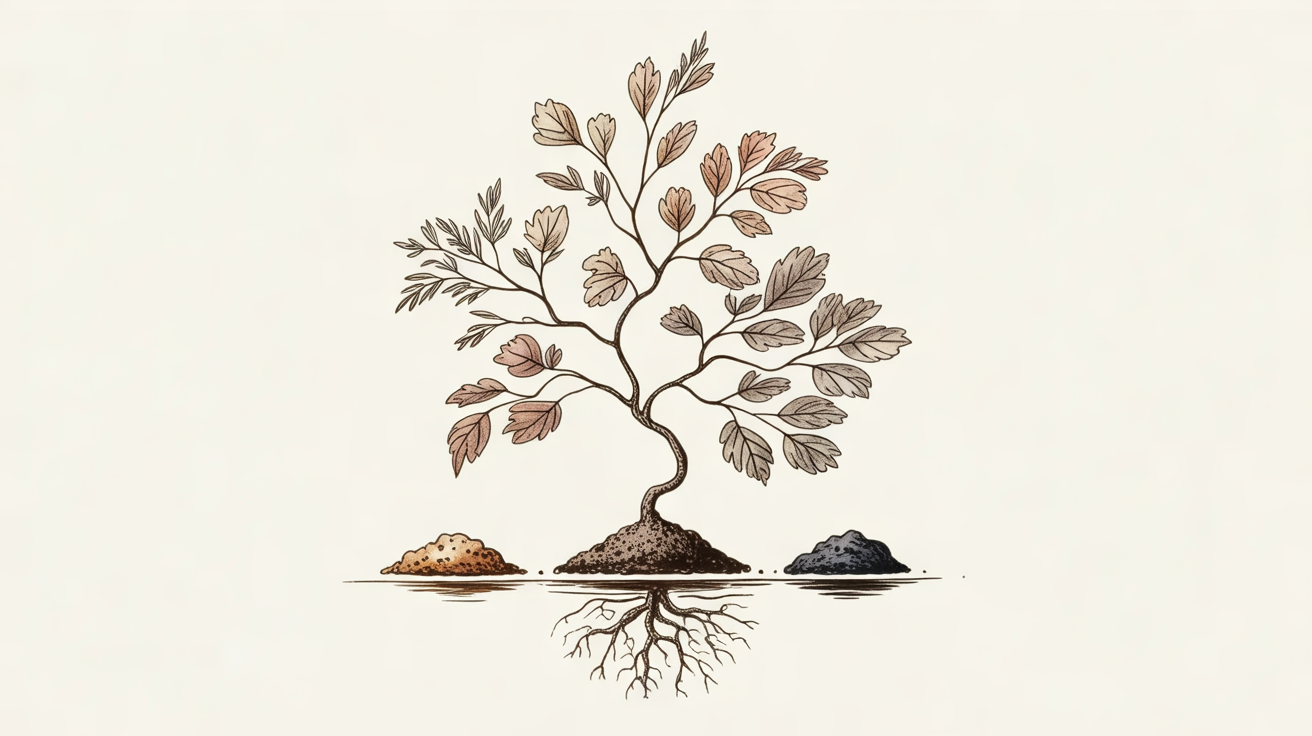
Bonsai soil ratios should follow your local climate and weather rather than a fixed recipe. The aim is always the same: enough drainage, enough moisture retention and healthy roots. Akadama, pumice and lava rock each push that balance in a different direction, so the right proportions depend on where the tree lives.
One limit should be stated at the start. The evidence gathered here concerns soil composition only. It says nothing about the best repotting month for each species, how much root to remove, or what to avoid in the first weeks afterwards, so those questions are left to species-specific guidance. What follows will help you decide what goes into the pot when you do repot.
Why climate changes the mix
Water is the link between weather and root health. Too much of it sits around the roots in a wet spell, and too little reaches them in a dry one. Adjusting the mix lets the substrate correct for the weather instead of working against it.
The practical rule is that coarse, hard, fast-draining components suit wet conditions, while more water-holding components suit dry ones. Cold adds a second concern, which is whether the particles survive the winter intact.
Damp, rainy and humid climates
Where rain or humidity is the main problem, increase the share of lava rock, pumice or grit. Two independent sources agree that this improves drainage and aeration and lowers the risk of waterlogging. Roots need air as well as water, and a mix that stays saturated gives them very little of it.
Heat can make matters worse. One source states that high heat combined with high humidity speeds up the physical breakdown of akadama. This is a single-source claim, but it fits the broader advice to lean on harder, more durable components in such conditions.
The same source says expanded shale performs well as an amendment in hot, humid regions such as the southeastern United States. It also says that in mild, temperate climates with rainy winters, a fast-draining ratio reduces the threat of winter waterlogging. Both points rest on that one source, so treat them as a starting point to test against your own results.
Hot, dry and windy climates
In hot, dry or arid places the problem reverses. Three sources agree that raising the proportion of akadama, or adding a small organic component, helps the mix hold enough moisture and prevents water stress. A further source notes that high temperatures and wind speed up evaporation and dry bonsai soil out quickly, which is the reason for the extra retention.
There is a second approach, and it points the other way. Some growers in hot, dry climates cut back akadama and use more pumice, because pumice releases its moisture more slowly than akadama. This comes from a single source and describes some growers rather than a general rule.
The two approaches are not easy to reconcile from this evidence alone. If you grow in a dry climate, keep a record of how quickly each mix dries between waterings and adjust from there.
Cold winters and freeze-thaw cycles
Frost affects the structure of the soil as well as the roots. Two sources agree that repeated freeze-thaw cycles make soft grades of akadama shatter and break down into fine particles. A mix that was well structured in autumn can therefore be very different by spring.
For severe freeze-thaw zones, one source recommends frost-stable materials: hard-grade akadama, pumice or calcined clay (turface). It argues that these prevent frost damage to the substrate structure. Again this is a single-source claim, though it follows logically from the finding about soft akadama.
A quick comparison
| Climate | Adjustment | Strength of evidence |
|---|---|---|
| Damp, rainy or humid | More lava rock, pumice or grit | Two sources agree |
| Hot and dry | More akadama or a minor organic component | Three sources agree |
| Hot and dry (alternative) | Less akadama, more pumice | Single source |
| Cold with freeze-thaw | Avoid soft akadama | Two sources agree |
| Severe freeze-thaw | Hard akadama, pumice or turface | Single source |
| Mild with rainy winters | Fast-draining ratios | Single source |
Putting it into a routine
Treat the mix as part of the seasonal care plan rather than a one-off decision. Write down your climate, the ratio you chose and how the soil behaved through the wettest, driest and coldest parts of the year. After a season or two the journal will show whether your mix drains too slowly, dries too fast or breaks down early.
Start from the claims with the widest agreement: more drainage components where it is wet, more water-holding material where it is dry, and no soft akadama where it freezes. Use the single-source suggestions as experiments on one tree at a time, and let your own records decide which of them stay.
Sources
This article was written from the reporting below.
- tinytreecraft.com — Bonsai Soil & Repotting 101: Mixes, Drainage, and Timing - Tiny Tree Craft
- bloomingexpert.com — Bonsai Soil Ratios: Akadama, Pumice, and Lava Rock
- bonsaicraft.com — How to Make Bonsai Soil at Home: Best Mix & Akadama Tips - Bonsai Craft
- lawngearlab.com — How to Make Bonsai Soil? | Mix Ratios That Work
- natesnursery.com — Bonsai Soil Information | Nate's Nursery
Generated with sources · reviewed by a human: yes · Approved by mariofilk, 9 Oct 2026 · Sourcing policy